
Summary
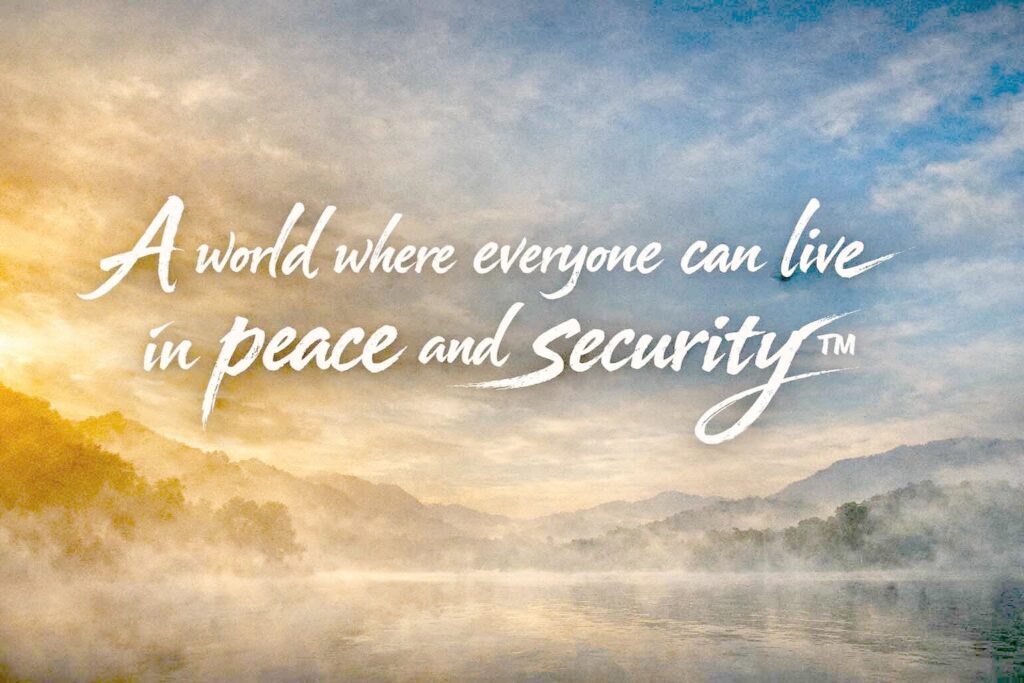
A world where everyone can live in peace and security is not an abstract ideal but a structural reality shaped by individual intention. Peace is not merely the absence of conflict, and security is not control. Both emerge from trust, responsibility, and relational awareness. Sustainable stability begins within the individual and expands outward through cumulative alignment. Even a single intention, held with clarity and continuity, can become part of a larger architecture of peace.
Peace and Security as Structural Reality
A world where everyone can live in peace and security is often spoken of as a distant dream — an ideal reserved for political speeches, humanitarian campaigns, or future generations. Yet peace and security are not abstract aspirations. They are structural conditions. They are lived realities that must be built, sustained, and protected.
If peace is understood merely as the absence of conflict, it remains fragile. If security is reduced to enforcement or control, it becomes unstable. A truly peaceful and secure world is not imposed from above. It emerges from within society — and ultimately, from within individuals.
Peace Begins with the Individual
Peace and security begin with one person.
Not with institutions alone.
Not with governments alone.
Not with systems alone.
They begin with intention.
An individual’s intention may appear small. It may not command attention. It may not generate immediate transformation. Yet history demonstrates that enduring social change often originates from a single human conviction — a belief that the world can move toward greater dignity, fairness, and safety for all.
Survival, Structure, and Stability
Every society prioritizes survival. Food, shelter, economic stability, and physical safety are foundational. No philosophy can ignore this truth. Human life depends upon material conditions. History confirms that when these conditions collapse, peace collapses with them.
For this reason, peace and security cannot be separated from sustainable structures. A safe world is not created by slogans; it is created by systems that allow people to live with dignity. Stability must support freedom. Protection must support trust. Security must support human flourishing.
The Internal Foundation of Peace
Systems reflect the consciousness of those who create and maintain them. If fear dominates, systems become restrictive. If distrust prevails, systems become divisive. If indifference spreads, systems decay.
The foundation of peace is internal before it is external.
An individual chooses not to escalate hatred.
An individual chooses dialogue over hostility.
An individual chooses responsibility over apathy.
Empathy as Infrastructure
Empathy is not weakness. It is infrastructure. It connects isolated experiences into shared understanding. When empathy spreads, division softens. When understanding expands, fear loses intensity. When fear decreases, stability strengthens.
Social change rarely begins with mass consensus. It begins with resonance.
One voice resonates with another.
One conviction connects with another.
One act of integrity encourages another.
Cumulative Alignment
Over time, small acts accumulate into cultural shifts. Cultural shifts reshape institutions. Institutions reinforce norms. Norms influence generations.
This is how sustainable peace develops — not through sudden force, but through cumulative alignment.

Peace and Security as Ongoing Commitment
Peace and security must remain dynamic. They are not fixed achievements. They are ongoing commitments.
Social transformation does not require unanimity at the outset. It requires initiation.
One Intention Can Begin
One intention can be enough to begin.
One conversation can redirect hostility.
One creative act can redefine meaning.
One ethical decision can prevent harm.
Relational Outcomes
Peace and security are relational outcomes.
They depend on trust.
They depend on responsibility.
They depend on shared commitment to human dignity.
Trust Over Control
Security rooted in trust is more durable than security rooted in control.
Control requires constant enforcement.
Trust generates voluntary stability.
The Digital Talisman Within the Ecosystem
Each piece matters.
A digital talisman may appear symbolic, yet symbols shape perception. Perception shapes behavior. Behavior shapes systems. Systems shape society.
A small intentional artifact can function as a reminder: that peace is constructed, that security is relational, and that participation is personal.
The question is not whether one individual can solve global conflict. The question is whether one individual can contribute to the conditions that reduce conflict.
The answer is yes.
Not through domination.
Not through coercion.
But through alignment, empathy, and sustained intention.
Peace is not passive.
Security is not accidental.
Both are constructed.
And construction begins somewhere.
It begins with one.
One is enough.
A digital talisman is a puzzle piece — a deliberate contribution to a larger architecture of peace, security, and human connection.

Frequently Asked Questions
What does “peace and security” mean in this context?
Peace and security are understood not merely as the absence of conflict or control, but as structural conditions rooted in trust, responsibility, and human dignity. They are relational and continuously shaped by individual intention.
How can one person contribute to peace?
Peace begins at the level of individual intention. Small acts — choosing dialogue over hostility, responsibility over indifference — influence relational fields that expand outward into communities and institutions.
What is the role of intention?
Intention is the state before action. It is not a decision or force, but a presence that shapes how action emerges. Sustainable peace depends on intention before structure.
How does a digital talisman relate to peace and security?
A digital talisman functions as a symbolic fragment within a larger ecosystem. It serves as a reminder that peace is constructed through cumulative participation, not imposed through force.
Is this a political statement?
No. The concept addresses structural and philosophical foundations of peace rather than political ideology. It focuses on relational awareness and individual responsibility.
May there be a world where everyone can live in peace and security.
For a quieter reflection on inner intention and world peace, see
A Deep Prayer for World Peace
.
May today be a good day.
May good fortune come your way.